
The Shrinking Family Culture of Japan: How the Nation is Moving on From the Ie System
INDEX
Japanese family culture is vastly different from that of any other country in the world.
In the past, the culture was strongly rooted in a male-dominated system centered on the "ie / 家" (a term for a multi-generational household). The eldest son would typically inherit the physical house and the family's legacy, holding the power. However, with the diversification of values, this unique Japanese "ie" system has changed significantly, except in some rural areas.
I was born as a second son in a regional city in Japan, and my parents never asked me to inherit the house or their assets. I've been trying to build a new kind of family within Japan through my own trial and error.
In this blog post, I'd like to look at how Japanese family culture is changing in modern times and, from a Japanese perspective, why these changes are happening.
The Shrinking Japanese Family
In the traditional Japanese family, the head of the household, the patriarch, held absolute power. The eldest son would usually inherit the "ie," simultaneously taking over the assets his parents had built.
Therefore, the typical living arrangement was a multi-generational household where the eldest son, his wife and children, and his parents all lived together.
It was also customary to maintain relationships with relatives, mainly on the husband's side. People built these kinship ties by inviting relatives over and exchanging seasonal gifts.
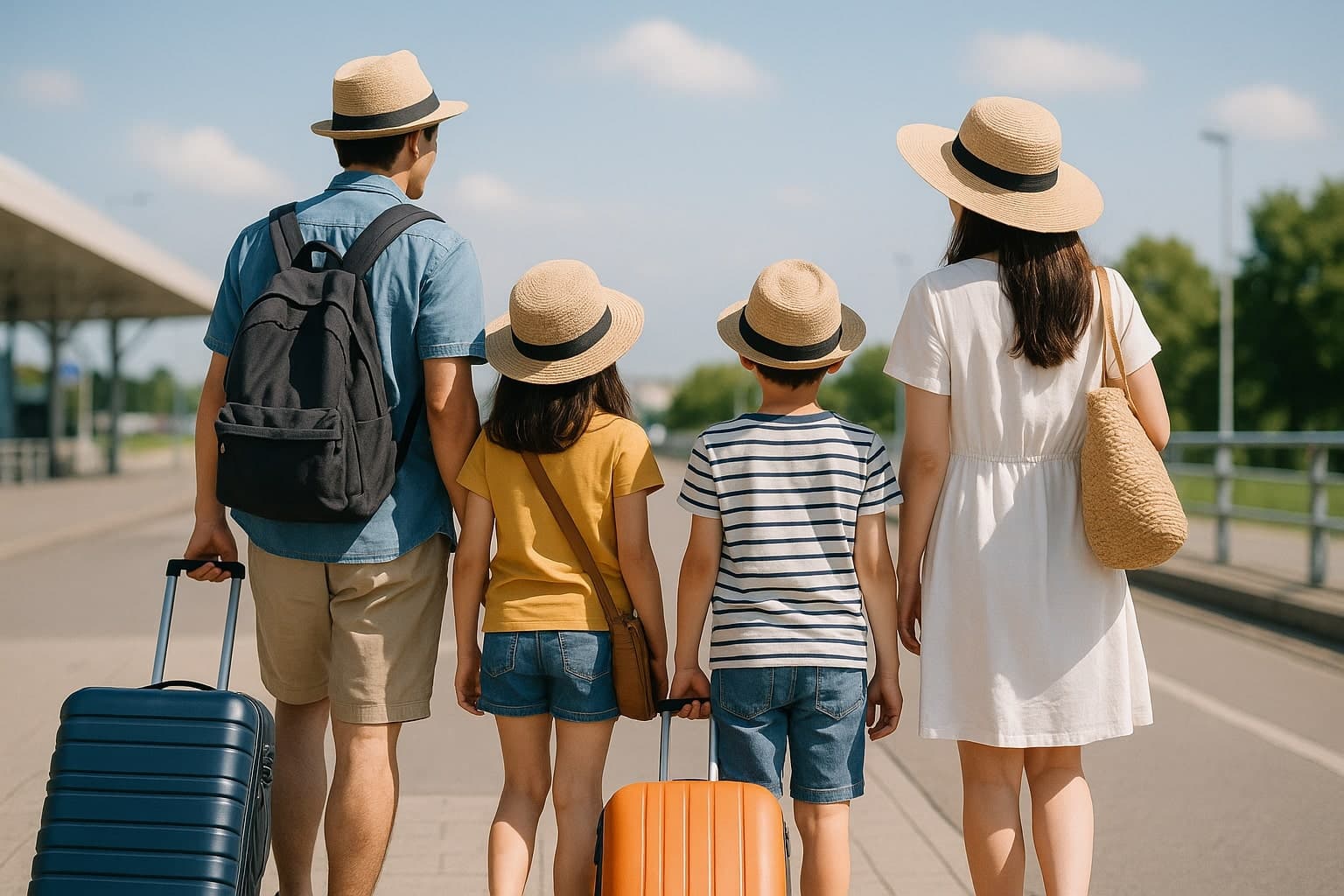
However, this traditional view of the family has crumbled in modern times. It's now more common for a couple to live on their own, away from their parents, and perhaps have children.
At the same time, the number of couples who live together as partners without getting married is increasing, as is the proportion of people who live alone, without a partner or marriage.
This shrinking of the family unit is not unique to Japan; I believe it's happening all over the world.
However, in Japan, there's a strong tendency for people to distance themselves from their siblings and relatives, almost as a backlash against the fatigue and hassle of the compulsory family and relative associations based on the old "ie" system.
While this rapid shift to smaller families allows for more freedom, it also narrows the scope of support available when a child is born, when family members get older, or when financial help is needed, increasing the risk of isolation.
Why Have Japanese Families Become Smaller?
Of course, this desire for smaller families is partly due to a change in the way Japanese people think. But it's hard to believe that such a drastic change could happen in just one generation based on individual mindset shifts alone.
A more fundamental reason for the narrowing scope of the family is the change in social structure. It has become more beneficial for a family's interests to prioritize wider, external relationships over relying on parents and relatives.
In the era when the "ie" system was strong, people could get jobs through connections with their parents or relatives. When they needed to receive a service or buy a product, going through familiar relatives felt safer.
However, in modern business, using family or kinship connections for jobs is generally prohibited. Furthermore, it's now easier to build a wide range of relationships through various events and the internet, making it more advantageous than using family ties to purchase services or goods.
In other words, we now live in a society where connecting with the wider world offers greater opportunities than relying on the narrow circle of relatives.
Moreover, the traditional kinship system involves a lot of mental and physical effort, with its traditional power dynamics—like the hierarchy with the eldest son—and the daily gift exchanges, while the material rewards take a long time to materialize.
As a result, the family structure centered on the "ie" gradually lost its advantages, which has accelerated the trend of Japanese people preferring smaller families.
In addition, although Japan's economy has been stagnant for a long time, there are still various systems and support from the national and local governments to assist families financially, socially, medically, and in their daily lives.
The existence of this stable Japanese society, where people can utilize these support systems, has led to the decline of the old, restrictive "ie" system and the shift towards smaller families.
The Current Search for a More Flexible Family
However, the rise of these smaller families has also led to the isolation of individual family units in Japan.
Consequently, relationships between siblings, relatives, and even parents and children have weakened. This has given rise to problems like "lonely deaths," where an elderly parent who has lost their partner also loses contact with their children and dies alone in isolation.
Amidst this, I think Japanese people are now searching for new forms of family.
For example, when I was younger, I lived in a share house, where about 10-20 people lived together in the same house or apartment building.
This is another example of a movement to explore new, more flexible family structures, different from traditional families based on blood or marriage, by living together.
In modern Japan, where there is no longer a single, absolutely correct form of family like the old "ie" system, each person is free to explore their own family structure. While this allows everyone to create a happier family shape for themselves, it also means each individual needs to understand what they want, and the responsibility placed on each person is growing.
In that sense, I'm also excited to see what new forms of family, unbound by traditional frameworks, will emerge in Japan.
Thank you for reading.

Discover articles that unravel the mysteries of Japanese culture and behavior.